Blogs > Horse Sense

Marissa Raymo will discuss everything about horses, including horse health care tips, training tips, equestrian friendly trails, horse buying info and much more.

Wednesday, June 8, 2011

And my least favorite part about owning a gelding is....

Sheath Cleaning!


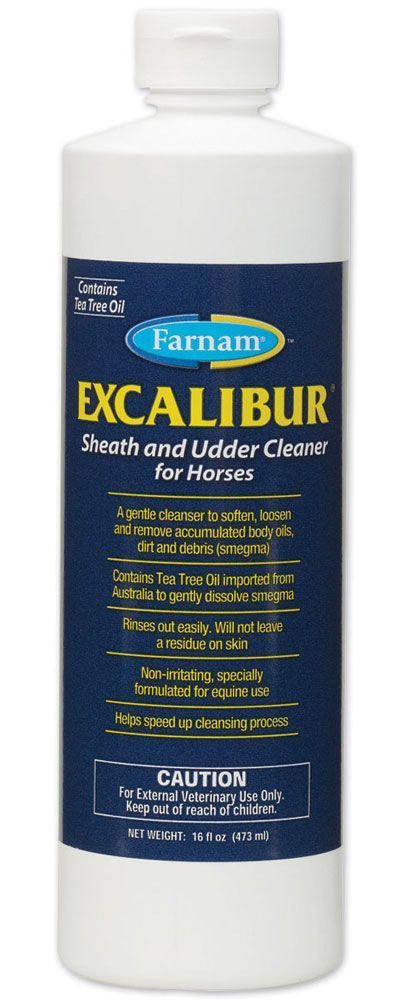
It's that time of year again! After yesterday's evening hose-down, I finally forced myself to perform my least favorite equine activity. Despite the uncomfortable and unpleasant (is it just me, or do all horse sheaths have that same distinct scent?) nature of sheath cleaning, it is a very important part of your horses' health. 


Check out this great article for more information (and diagrams) on

Or, if you would prefer a visual aid, check out this video from Rick Gore of ThinkLikeaHorse.org (Warning: It's kind of graphic)


Labels:

Tuesday, May 24, 2011

Recent Outbreak of EHV-1, Equine Herpesvirus

At least 7 horses this month have been killed or euthanized due to the outbreak of EHV-1, Equine Herpesvirus. The outbreak started in Utah (it is believed to have started at the NCHA Western Regional Championships) and quickly spread across many of the Western States. EHV-1 is highly contagious to horses, and though it does not affect humans, it can be spread from humans to horses. It is a neurological disease and symptoms include lack of coordination, gait abnormalities and a temperature above 102F.
For more information on the virus, it's symptoms, and how to protect your horses, check out this resource guide from the Center for Equine Health UC Davis.

Also, TheHorse.com will be hosting a webinar tonight from 8 p.m. to 9 p.m. Eastern Time. According to their website, this webinar will "provide horse owners with an update on the status of the EHV-1 outbreak and timely information on EHV-1 disease, testing, how to monitor your horse for disease, and how you can prevent EHV-1 spread with optimal horse management, hygiene, and biosecurity measures. Following the presentation, our panelists will answer your questions on EHV-1 for another 30 minutes."

For more information or to reserve your spot, check out their website.

Labels:

Monday, April 12, 2010

DIY Vaccinations - Part 2

I have finally done it! After more than a decade of owning horses (and with the help of my favorite farriers Tim & Koren from TK Hoof Care of Highland 248-431-3775), I have finally learned how to administer intramuscular vaccinations. My wallet feels heavier already!

Check out the video below to see how I did. And remember, there are a lot of things to take into account when vaccinating your horses, such as:

  • Which vaccines are right for your horse
  • Where the best injection sites are and how to avoid blood vessels
  • What to do in case of an adverse reaction

  So be sure to consult a professional before attempting to vaccinate your animals. 

For a step-by-step, Click Here!


Cowboy Logic of the Day
"Coolness and a steady nerve will always beat simple quickness. Take yer time and you'll only need to pull the trigger once."

Labels:

Saturday, April 10, 2010

Knowing When to Say When


I recently saw an ad offering two young horses (gasp) “Free to a Good Home”. The catch here was that the 3-year-old twins had defective legs, caused by becoming “tangled in the womb”.

The poster actually had the nerve to offer them up as pasture pets. Which to me is like saying, “Well I’m sure not going to pay to feed my pasture ornaments for the next 20-some years, but you can!”

Often when a breeder finds out that their mare is carrying twins (ask your vet about ultrasounds!), they are faced with the decision of terminating one of the fetuses in order to 1.) ensure the safety of their mare and 2.) increase the likelihood of ending up with one healthy foal rather than two undersized and possibly defective babies.

In many cases of twin pregnancies in horses, nature will take its course and one or both embryos will be resorbed or aborted during the first 60 days.  Even then the mare is at risk for toxemia from carrying a dead fetus. Worst case scenario, the breeder could end up with 2 stillborn foals and a dead mare.

In this particular case, one or both of these poor young horses are likely to end up in the hands of a slaughterhouse or glue factory before they make it to their teens. A situation like this makes me wonder, “How did it get this far?” Was the owner not aware that his/her mare was carrying twins? Did they neglect to have an ultrasound once she was bred? Or did the owner see dollar signs once they found out that their single stud fee was producing double results?

Now we may never know the reasons behind this particular situation and I’m not above the idea that it may have somehow been a complete accident. It’s hard for me to judge since I once found out that my little barn kitten Chester was actually a Chessie by way of an unplanned pregnancy. 

But the moral of this story is that sometimes the best decision for your horse isn’t the easiest one to make.

So tell me, what would you do?

Labels:

Thursday, April 8, 2010

DIY Vaccinations

I have been toying with the idea of administering my own vaccinations for quite awhile now, but haven’t quite mustered up the guts to do it. However, now having two horses and two dogs, it seems that my annual vet bills are getting more than a bit out of hand.

Last year’s vaccination rounds for George (the pony) alone cost over $400 through my vet, where I can purchase all of the recommended vaccines from an online equine supply store (with the exception of rabies, which should always be administered by a vet) for less than $80.

So this Monday, I will attempt to vaccinate my own horses for the first time (with the help and supervision of a seasoned professional, of course). And in the event that I don’t pass out or vaccinate myself by mistake, I might just take on the dogs next!

So stay tuned to find out if and how I do!

The inevitable disclaimer…
The vaccinations recommended for your horse will vary based on a few factors – age, location, amount of travel, contact with other horses, and intent to breed. The American Association of Equine Practitioners recommends West Nile Virus, Eastern and Western Encephalitis, Tetanus and Rabies as core vaccinations that every horse should receive annually, regardless of ages, location, etc. Other vaccinations should also be considered based on your horse’s individual risk.

There is a lot to consider before you decide to vaccinate your own animals, like which vaccines can be administered together, what side effects are normal, and what to do in case of an adverse reaction - so please, please, please consult with your veterinarian before attempting to vaccinate your own pets. 


Cowboy logic of the day
"Don't worry about biting off more than you can chew. Your mouth is probably a whole lot bigger than you think."

Labels:

Online Marketing
Share